
A short walk from Soho to Southwark
In our work we have the privilege of speaking to the owners of marketing agencies all over the world every day. Those conversations offer a rare vantage point from which to sense the true pulse of the industry: how people are responding to the challenges we all face, what clients are asking for, how teams are coping, and what agency leaders really think about the future that lies ahead.
At the moment, that pulse feels uneasy.
Many owners quietly admit that they would like to step away from the business altogether. They survived COVID and the extraordinary disruption that followed, endured the relentless pressure of procurement, adapted to waves of new technology, and watched margins tighten year after year. For many of them, work that once felt exhilarating now feels draining, and a profession that once promised excitement and creative adventure has begun to feel more like a long, grinding obligation.
Perhaps the most telling observation of all is a simple one: it no longer feels like fun.
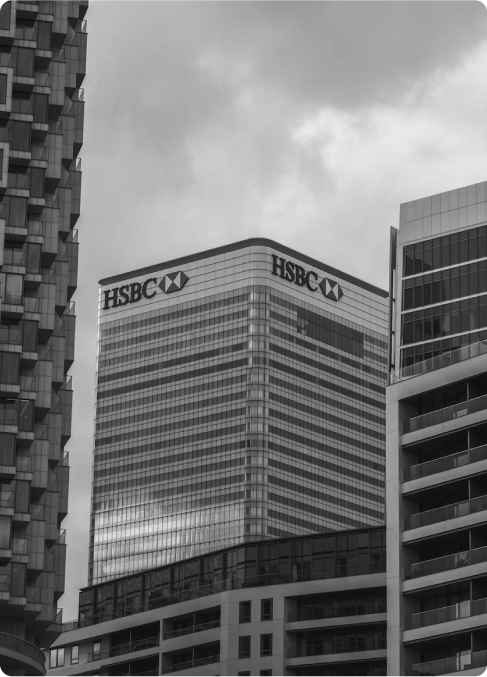
That thought was on my mind the other day as I walked past the WPP Campus—the sleek grey monoliths of One Southwark Bridge Road and Rose Court in London, where thousands of advertising professionals now spend their days inside immaculate glass buildings filled with identical chairs, identical meeting rooms and, inevitably, identical PowerPoint decks.
One cannot help but wonder whether identical thinking sometimes follows.
These buildings are more than just real estate; they are architectural symbols of an entire era in our industry. They reflect the age of the holding company and the industrialisation of creativity – a business model that elevated scale, automation and operational efficiency above the more intangible qualities of texture, personality and inspiration that once defined the craft.
It was striking to hear the new CEO of WPP, Cindy Rose, recently suggest that the organisation no longer sees itself as a holding company. Perhaps that shift in language reflects a deeper realisation shared quietly across the industry: that the model itself may have reached the end of its useful life, not only as a business structure but also as a cultural framework. It has struggled to serve clients as well as it once promised, and it has often served the people working inside it even less.
The world those buildings represent feels very far removed from the Soho where many of us first learned the business.
In those days advertising felt less like an industry and more like a slightly disreputable travelling circus that had somehow taken up permanent residence in a single, energetic square mile of central London.
When Soho was a village
During the late 1980s and early 1990s, Soho was not merely a district of London; it was the creative village of the global agency world, and quite possibly the most exciting place on earth to work in an agency.
Agencies occupied crooked Georgian townhouses whose staircases creaked with the footsteps of young creatives rushing between floors. Around them clustered production companies, edit suites, photographers, illustrators and publishers, all scattered through narrow streets that seemed permanently scented with espresso, cigarette smoke and the faint but unmistakable smell of possibility.
The geography of the place made creativity wonderfully accidental. You might leave the office with the beginnings of an idea and, within the space of an hour, find yourself returning with a director, a photographer and a much better version of the thought you had started with.
Lunch might unfold at Il Siciliano, with Aldo holding court at the centre of the room, while the evening would almost inevitably drift toward the Groucho Club, where the industry gathered to exchange stories, gossip and occasionally even ideas.
Between those moments you would inevitably encounter a planner, a copywriter, a film director and—quite possibly—a jazz musician, because Soho at that time existed at the intersection of advertising, film, music, publishing and art. The entire neighbourhood seemed to run on a combustible mixture of talent, mischief and mild chaos, and it was precisely that chaos that made it so fertile.
Creativity, after all, is rarely tidy. It thrives on collisions between personalities, arguments about ideas, bursts of laughter, flashes of ego and the occasional moment of glorious irrationality.
The industry was full of characters. Copywriters often resembled slightly dishevelled poets who had accidentally wandered into commerce, while art directors dressed like rock stars and producers possessed the miraculous ability to solve impossible problems in the time it took to order another round at the bar.
Today an HR department might describe many of those individuals as “challenging”, but at the time they were simply the people who made the work extraordinary.
On evenings like those you might hear the melancholy warmth of A Rainy Night in Soho drifting from a nearby bar, sung by The Pogues. The song somehow captured the spirit of the place: boisterous and imperfect, full of life in the moment yet already carrying the faintest hint of nostalgia.
We did not realise it then, of course, but we were living through what would later be remembered as a golden era.
The age of big risks
Part of what made that era so exhilarating was the way the business itself operated. Decisions were often made in rooms filled with strong opinions and stronger personalities, and ideas were approved not because they had passed through endless layers of procurement or been validated by predictive analytics, but because someone in the room believed in them deeply enough to fight for them.
An idea that made people laugh, or surprised them, or simply felt brave in a way that others had not yet attempted could quickly gather momentum. Agencies took risks—sometimes enormous ones—and when those risks succeeded they did so spectacularly.
Campaigns entered popular culture, agencies became famous almost overnight, and careers were launched on the strength of a single piece of work that captured the imagination of the public.
It was not always sensible, but it was undeniably exhilarating, and above all it was joyful.
The age of optimisation
Over time, however, the centre of gravity within the industry began to shift. Technology transformed the way agencies operated, data became an essential currency, procurement departments gained influence and efficiency gradually became the dominant language of the business.
In many respects these changes were inevitable and even necessary. The industry professionalised itself, then systemised its processes, and eventually began to optimise them with increasing sophistication.
Yet somewhere along that journey something subtle changed.
Creativity, which had once been the beating heart of the industry, increasingly began to feel like a department within it rather than the force that animated the whole enterprise. Even the architecture of the business seemed to reflect the shift, as the crooked townhouses of Soho gave way to vast corporate campuses that were functional, efficient and impressive, yet curiously devoid of the quirks and irregularities that once made the industry feel human.
In the process something of advertising’s personality—and perhaps even its soul—was quietly diminished.
The change calls to mind the eerily ordered vision of industrial progress imagined by Thomas Hardy, in which every aspect of life becomes rationalised and optimised until something essential to human vitality slowly disappears.
Finding our way back
And yet there are reasons to feel optimistic.
Creativity has never truly depended on buildings, holding companies or organisational charts. At its core it has always been about people—curious people, brave people, slightly eccentric people who take pleasure in surprising and delighting others through the ideas they bring into the world.
Those instincts have not disappeared. They have simply been buried beneath an accumulation of dashboards, processes and quarterly forecasts that have gradually obscured the simple pleasures that once drew so many talented individuals into the profession.
Which suggests that finding our way back to joy may not require a revolution at all, but rather a thoughtful rebalancing of priorities.
For those of us who own or owned agencies, that rebalancing might begin with a few simple commitments.
Five ways agency owners can find their way back to joy
- Put ideas back at the centre of the business.
Technology, data and process should support creativity rather than replace it. The agencies that thrive over the long term are rarely the most efficient; they are the ones whose ideas capture the imagination of clients and audiences alike. - Focus on agency culture and create space for characters.
Agencies have always been built by brilliant misfits—people whose curiosity, eccentricity and stubbornness often made them difficult to manage but indispensable to the work. If we try to sand away every rough edge, we inevitably sand away the originality as well. - Encourage thoughtful risk again.
The most memorable campaigns have rarely emerged from cautious thinking. They have come from moments when agencies and clients were willing to be brave together and trust an idea that felt slightly uncomfortable but undeniably exciting. - Rebuild real creative communities.
Great ideas flourish when people collide in the real world—in conversations over lunch, in late-night debates, in the spontaneous encounters that once defined Soho. Creativity is still, at heart, a social activity. - Make the business fun again.
Joy is not a frivolous luxury in a creative industry; it is one of its most powerful fuels. The best work in advertising has almost always been created by teams who were enjoying themselves and who believed, even briefly, that what they were doing mattered.
The Soho of the 1990s may never return in quite the same form.
But the spirit that made it special—the sense that creativity could appear anywhere when curious people collided—remains available to us.
And if we can rediscover even a small measure of that spirit, the next great era of agencies may not lie behind us at all.
It may simply be waiting for us to remember how to enjoy the work again.
*Written by Doug Baxter, Managing Partner · Agency Futures