The agency-client relationship, across all sectors, is a recurring source of inspiration in television and film. Sometimes demystified and almost always romanticised to the extreme, these audiovisual productions reflect a reality that bears little resemblance to the day-to-day lives of those of us who are part of this professional dichotomy in real life. And that makes sense, because that’s what fiction is for.
The most notable example is the original Mad Men. Millennials learned about advertising from the impeccably dressed Don Draper, who pulls the strings of the industry in late 1960s New York. The series presents a Draper who does not hesitate to storm out of the room if his ideas are not to the client’s liking. More recent is the French series Call My Agent!, which shows the ins and outs of a Parisian talent agency struggling between ruin and success. This production satirises the eccentricity of the celebrities that ASK represents and portrays the ambition of executives who would do anything to maintain their position.
Fortunately, collaborating with external teams in communication in this case is much easier than it used to be. in communications in this case, it is much easier and (and less dramatic) than what is seen on screen. Below, I have compiled a few reflections on my day-to-day work with highly diverse teams at various agencies in different countries. This is not a list of best practices, much less a manual for being a good client, but simply a compilation of considerations that I personally find useful as a professional.
Leave your ego behind
Let the person who knows the most, has the most experience or is the most competent in a subject they deal with it is something that, in principle, falls under its own weight. However, sometimes we find ourselves resisting delegating, often guided by that little voice inside us that tells us we should manage it ourselves. “you should handle this yourself”, aka our ego.
Being aware of this bias is the first step toward eliminating it. Reaping the rewards of distributing tasks based on the skills and abilities of each member of the communication team—whether internal or external—is the second and final step.
Throughout my years in public relations, I have been extremely fortunate to work with fantastic external professionals, sometimes with more years of experience or greater knowledge of the local market than I have. During this time, recognizing my own strengths and those of others has brought me much professional joy, and I cannot recall a single occasion when I have regretted doing so.
Communication and business consultants
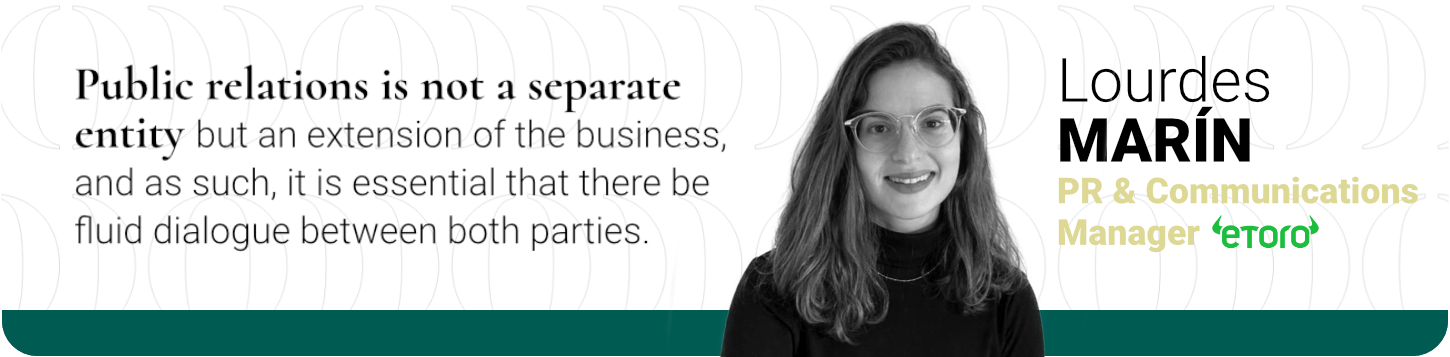
Public relations is not a separate entity but an extension of the business, and as such, it is essential that there be fluid dialogue between both parties. Scheduling regular meetings with regional directors or heads of other departments allows those of us responsible for designing and implementing the communication strategy to immerse ourselves in the challenges and objectives with first-hand information, providing an opportunity to ask questions and exchange ideas that enrich our work.
This also includes external communications teams. Setting aside a few hours a year to moderate the agency-business relationship and encourage open dialogue also serves to increase visibility of the value that public relations brings to the company as a whole.
Protect and manage your time with your agencies
Opening up conversations between the communications team and the rest of the business does not mean giving others free rein to use up the valuable time we have with our agencies. Although it may seem obvious, the absence of a clear procedure for managing questions and requests can result in misunderstandings, duplication and, ultimately, ineffective use of resources.
One way to avoid this would be to implement a simple protocol that opens a channel of communication between both parties, in which you are responsible for centralising, assessing and giving the green light (or not) to queries, and ensuring that internal teams are familiar with this system.
Joint preparation for crises
Developing a communication plan is a key step when starting a new project or beginning to work with an external communication team (or client, depending on the situation). However, this plan often does not include a section on potential risks, or contingency management is simply relegated to the internal team.
We must prepare ourselves together for crises, because it is precisely this preparation that ensures the best possible outcome if the worst ultimately happens. And we must do so without naivety: no sector, firm or professional is immune to crises, and although these may vary in nature and form, the way to mitigate their potential consequences is the same.
Spending time discussing the risks with your communications team, designing a joint strategy that assigns a defined role to each person, and scheduling regular meetings to review the plan’s validity can be a good way to prepare. In the best-case scenario, it will never have to be implemented and will have been a great practical exercise for everyone.
These notes are an invitation to take a step back and evaluate our relationship with our external communications team from a broader perspective. And, why not, as the year draws to a close, review whether there is anything we can improve for 2026. Don Draper would surely have fared better if he had done this exercise sixty years ago.
*Article written by Lourdes Marín, PR & Communications Manager at eToro.